
Stop Losing Plumbing Jobs to Missed Calls | SYSTREE
How-To, Lead Generation, AI Automation
How to Stop Losing Plumbing Jobs to Missed Calls
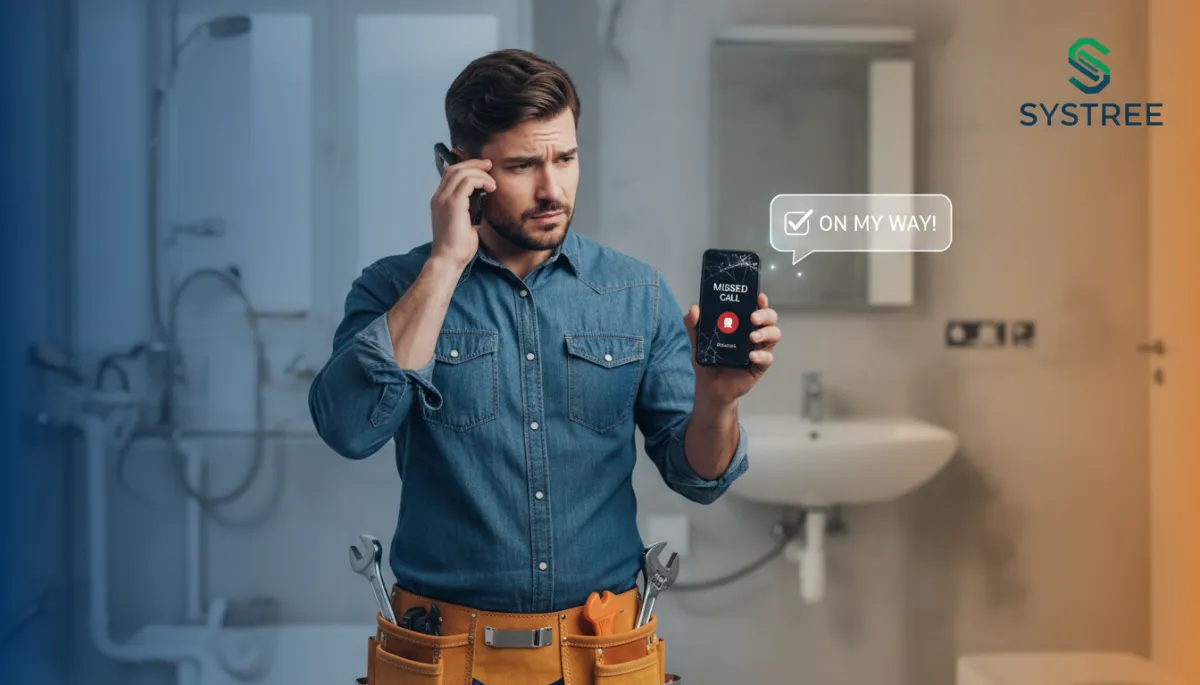
If you’re under a sink with water everywhere, your phone starts buzzing in your pocket, and you think, “I’ll call them back at lunch,” this article is for you. By the time you finish the job, there are three missed calls, one vague voicemail, and no text. You ring back—no answer. That job is gone. Someone else picked it up because they answered first. That’s the missed call text back plumber Australia problem in a nutshell. This post breaks down how much that habit is really costing you, why it keeps happening, and how a simple missed-call text back system can keep those jobs in your pipeline instead of your competitor’s. By the end, you’ll know exactly what to put in place—whether you work alone or run a small team—so every missed call gets a fast, professional response without you being chained to your phone.
The real cost of missed calls for Australian plumbers
Let’s be blunt—if you miss calls, you miss work. Industry audits across Australian tradies show plumbers typically miss between 20% and 40% of inbound calls, especially when they’re on the tools or after hours. In busy periods, some plumbing businesses see 30% to 40% of calls go unanswered. That’s not “the odd call here and there”; that’s a steady leak in your income.
Most customers won’t wait around. Around 62% of callers who hit voicemail don’t leave a message, and broader data shows up to 85% of people who can’t reach a business won’t call again. They just tap the next plumber on Google. On top of that, about 78% of jobs go to whoever answers first. So if you’re calling back even 15–20 minutes later, the odds are that job has already been booked with someone else.
Put some numbers on it. Average plumbing jobs sit in the A$350–A$500 range. With a 40% conversion rate, each missed call is roughly A$200–A$375 in expected revenue. Miss four calls a week and you’re looking at around A$72,000 a year walking out the door. Many plumbers are losing between A$45,000 and A$120,000 a year this way, and some much more. You feel it as “quiet weeks” or “slow months”, but the real cause is simple—no one is picking up or replying fast enough when the phone rings.
How missed call text back actually fixes the problem
The good news is you don’t need a full-time receptionist to plug this hole. A missed call text back system does one simple thing: when you miss a call, it sends a fast, helpful text message to the caller automatically. For plumbers in Australia, this lines up perfectly with how people prefer to communicate—quick, clear SMS with the basics covered.
Here’s how a solid setup usually works:
Instant text when you miss a call. Within a few seconds of a missed call, the system sends a branded SMS: who you are, a quick apology, and a clear next step. For example: “Hi, it’s Jake from XYZ Plumbing. Sorry we missed your call. Text back with your suburb, problem, and a photo, and we’ll reply with options.” This keeps the person engaged instead of heading straight back to Google.
Collecting the right details automatically. The text can ask for suburb, job type, urgency, and photos. That means by the time you check your phone, you’ve got all the info you need to decide if it’s a quick fix, an emergency call-out, or something to book later in the week. No phone tag, no half-done voicemails.
Prioritising the best jobs fast. Because you’re seeing replies in a clear thread, you can quickly jump on high-value or urgent work—burst pipes, hot water failures, blockages—without wasting time chasing tyre-kickers. You can also reply with simple templates for quotes, call-out fees, and availability.
Working after hours without “being on call”. If someone rings at 9.30pm, the text back still fires. You can include a line explaining after-hours rates or when you’ll reply in the morning. The caller feels heard, you set expectations, and you’re still first in line when they make a decision.
This is why “missed call text back plumber Australia” is becoming such a common search. People are sick of ringing tradies and hearing nothing. If your business is the one that responds instantly—even by SMS—you’re already ahead of most of the market.
How SYSTREE turns missed calls into booked jobs
At SYSTREE, we work with Australian plumbers to set up AI-driven call and message handling that feels human, but doesn’t rely on you answering your phone every time it rings. When a call is missed, our system sends a customised text, asks smart follow-up questions, and can even pre-qualify the job based on your rules—suburbs you service, job types you want, and hours you actually want to work.
For many plumbers, this sits alongside an AI “receptionist” that can handle web enquiries, Facebook messages, and repeat questions about pricing and availability. Everything feeds into one place, so you’re not juggling five different apps. You see a clear list of new leads, what they need, and what they’ve already been told. That means less admin, fewer double-bookings, and more time on billable work.
If you want the full picture of what’s possible, we’ve put together a detailed guide on AI for plumbers and how it handles missed calls, quotes, and follow-ups . The end result is simple: more of the calls you already get turn into booked jobs, without you needing to hire office staff or sit by the phone all day.
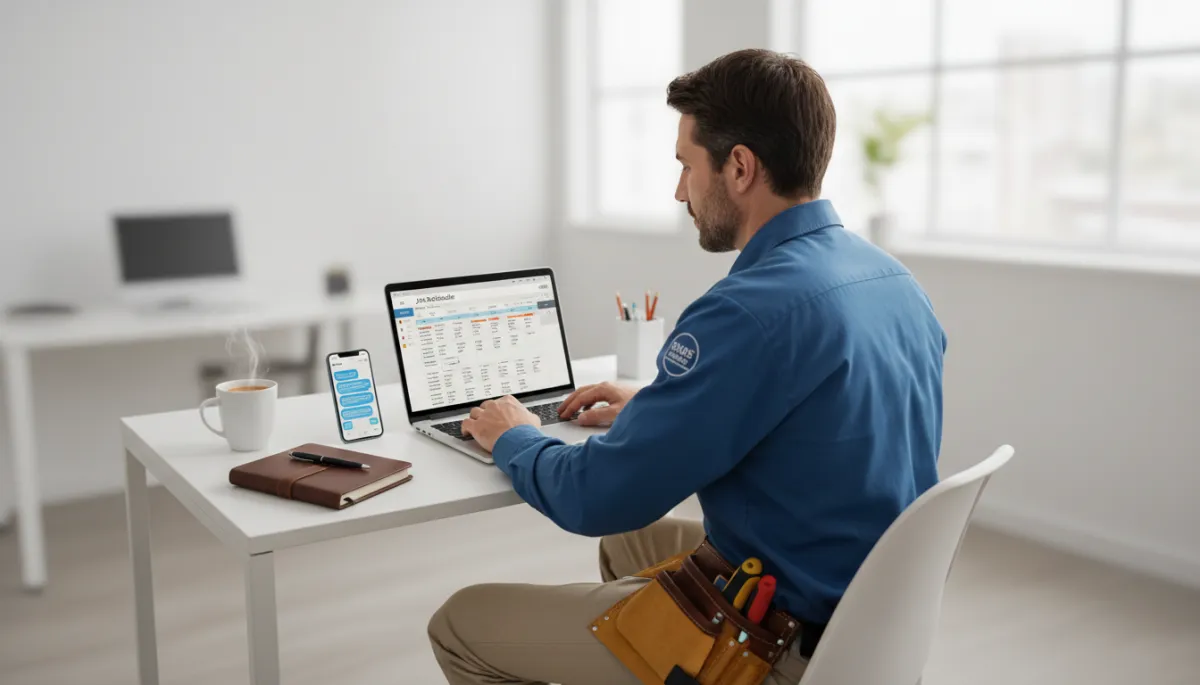
One missed-call text-back system can recover tens of thousands in lost plumbing revenue each year.
A real-world example from an Australian plumbing business
A Melbourne plumber we work with runs a small team—two vans, mostly residential work, a mix of emergencies and planned jobs. Before working with SYSTREE, he relied on voicemails and “I’ll call them back tonight” as his system. When we pulled his phone records, he was missing around 25% of inbound calls, especially mid-morning and late afternoon when he was on-site or driving.
We set up a missed call text back workflow with simple, plain-English messages. Every missed call got an SMS asking for suburb, issue, and a photo. The AI then sorted enquiries into “urgent”, “quote request”, and “general question”. Within the first month, he saw a clear change—people who would have dropped off at voicemail were replying with photos of leaking hot water systems, blocked toilets, and burst flexi hoses. His team could scan the list at lunch, call the best jobs first, and book them on the spot.
After three months, his numbers were steady: missed calls stayed about the same, but recovered revenue went up by roughly A$6,000–A$8,000 per month. Same marketing, same staff, same phone number—just a better system for what happens when he can’t pick up. That’s the power of treating “missed call text back plumber Australia” as a core part of your business process, not just a nice extra.
Practical steps you can take today, with or without SYSTREE
You don’t have to overhaul everything overnight. Here are simple, practical moves you can make this week to stop losing so many plumbing jobs to missed calls.
Write a standard missed-call text and save it as a template. Even if you send it manually for now, have a go-to message ready in your phone. Keep it short: who you are, apology, and what you need from them (suburb, problem, photos). This alone will recover more leads than silent voicemail.
Set “call-back blocks” in your day. Block 15–20 minutes mid-morning and mid-afternoon purely for returning calls and replying to texts. Tell your team to treat those blocks as seriously as a job booking. Fast responses in those windows can still win work even if you missed the initial ring.
Track your missed calls for two weeks. Look at how many calls you miss, what time they come in, and how many actually turn into jobs. Put a rough dollar value on it. Once you see the number, it’s much easier to justify a proper missed call text back setup or AI receptionist.
Ask customers how they prefer to communicate. Many will say text. If you know that, you can adjust your process—text quotes, confirmations, and ETAs instead of leaving voicemails that never get heard. This lines up with how tradies and customers already behave in Australia in 2026.
Explore an AI receptionist built for plumbers. If you’re ready to go beyond manual texts, look at how an AI receptionist for plumbers can handle missed calls, SMS, and web enquiries in one place . The right setup pays for itself with just one or two extra jobs a month.
Conclusion: stop letting good jobs go to the next plumber on Google
Missing calls is part of being a plumber—you can’t answer the phone while you’re under a house or dealing with a burst pipe. But losing thousands of dollars a month because no one replies quickly is optional. A simple missed call text back setup means every caller hears from you fast, gives you the details you need, and is far more likely to book with you instead of the next name on the list.
If you’re serious about plugging the revenue leak from missed calls and turning more of your enquiries into booked jobs, don’t wait. Book a free demo with SYSTREE and see exactly how this works for your plumbing business, using your numbers and your workflows.